Can Business Repair Society? Inside Luxembourg’s SIS Impact Economy

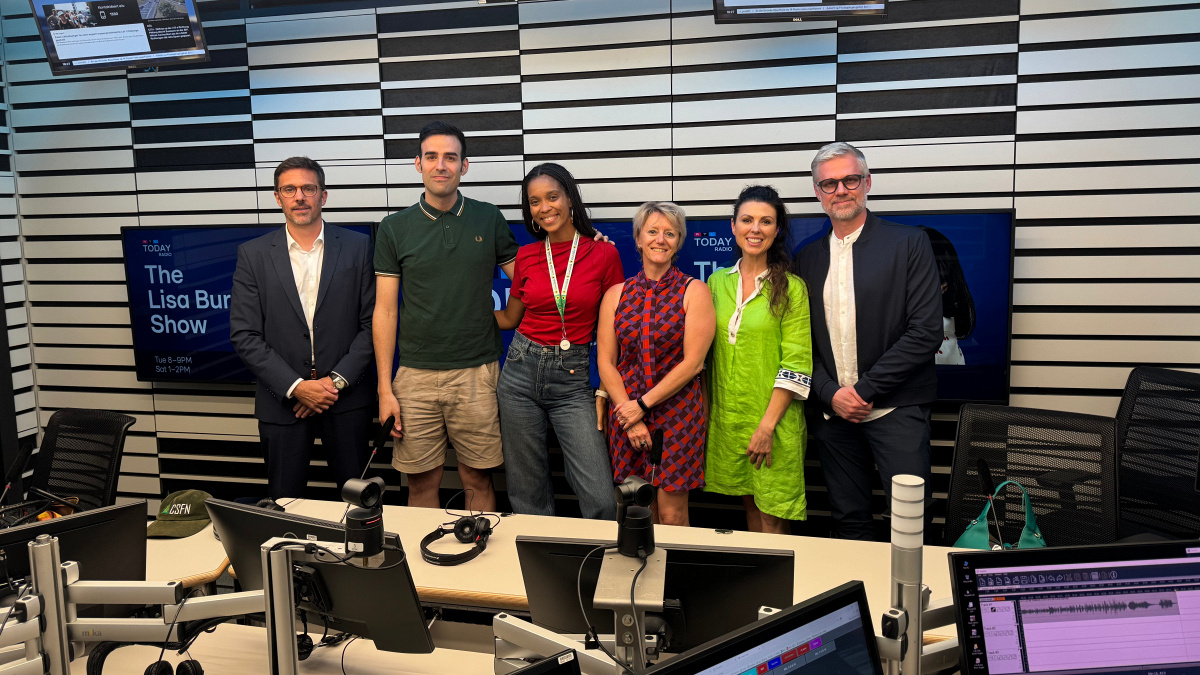

Four Luxembourg entrepreneurs tackle wasted energy, hidden disability, unaffordable housing and litter through the SIS model.
Most companies begin with a product. My four guests began with an irritation they couldn't ignore: buildings leaking untracked energy, disabilities hidden from view, workers priced out of the housing market and pointless litter on streets, forests, rivers and coastlines. Their response was to build a business around the repair job.
Luxembourg has a legal structure for precisely this kind of ambition. A Société d’Impact Sociétal, known as an SIS, remains a commercial enterprise, but its social or environmental purpose is written into the company itself. Its impact must be measured, reported and defended. At the time of our conversation, Luxembourg has 92 registered SIS companies working across 12 broad areas, including housing, health, education, climate, food and the circular economy.
First, find out what the building is doing
Virginie Ducommun, founder of Indoor Forest, calls her philosophy “efficient sobriety”. Her smart sensors can be installed in existing buildings without ripping through walls or replacing entire systems. They expose where energy and water are going, helping owners decide what genuinely needs changing and what can safely remain.
Luxembourg has developed a habit of destroying and rebuilding, Virginie argues, even when buildings still contain decades of useful life. A pink wall can be repainted. A functioning heating system can be maintained. Demolition should require a better excuse than age.
“Data is gold. Before you do anything, you need to know what’s happening.”
Virginie Ducommun, Indoor Forest
A sunflower that makes the invisible visible
For Jana Degrott, founder of Real Impact Hub, the mission is deeply personal. Her brother has a hidden disability. Her company represents the Hidden Disability Sunflower programme in Luxembourg, allowing someone to wear a discreet sunflower lanyard when they may need greater patience, understanding or support.
Jana spent two years pursuing the idea before securing Luxembourg Airport as her first major client. She then approached the international Sunflower organisation with a compelling entrepreneurial argument: the concept had already been sold, so perhaps it was time to answer her emails. Today, the programme is expanding into organisations including CFL.
“I have something you don’t see with your eyes. Please be patient, understanding, don’t judge me.”
Jana Degrott, Real Impact Hub
The lanyard does not reveal a diagnosis. It asks the rest of us to pause before turning difference into judgement. That small pause could be one of the most valuable services any organisation provides.
The housing crisis hiding inside Luxembourg’s success
Joe Schmit spent more than 15 years in real estate before co-founding Simpact, Luxembourg’s first private social property developer under the SIS structure. Its model combines state support, private financing and long-term rental housing whose income is designed to cover costs.
The need extends far beyond a narrow group. Young families, couples, single parents and much of Luxembourg’s working population can struggle to find secure, affordable housing. Simpact has signed a convention with the state targeting 250 units, Joe said, although Luxembourg will require many more organisations operating at that scale.
“The housing market doesn’t follow the growth.”
Joe Schmit, Simpact
Housing exposes the full machinery of a country. Land, construction costs, interest rates, municipal permits, schools, transport and public infrastructure all turn together. Build 25 homes in a small commune and it may also need classrooms for 50 children. A housing policy is quietly a policy for almost everything else.
One bag becomes a global movement
César González Fernández began picking up litter in 2018 because it bothered him. Five minutes, one bag, one cleaner patch of ground. That private act became Clean Something For Nothing, an app recording cleanups through location data, time, volume and weight.
At the time of recording, its community had collected approximately 926,000 kilograms of litter and was closing in on the one million kilogram mark. Its “Pick and Plant” programme also allows companies to fund one tree for every kilogram collected.
“Once you see it, you cannot unsee it.”
César González Fernández, Clean Something For Nothing
His deeper target is behavioural change. Once somebody has bent down and picked up another person’s cigarette butt, plastic bottle or food wrapper, litter becomes harder to ignore and much harder to drop.
Profit with proof attached
An SIS must still sell, recruit, pay salaries, manage cash flow and generate profit. The difference lies in what happens next. Impact shareholders do not receive dividends, profits remain inside the company and the organisation must prove that its promised social or environmental value actually occurred.
That makes the SIS label less of a halo and more of a discipline. These founders are asking Luxembourg to take impact companies seriously as economic actors, open procurement opportunities to them and help them reach the scale their missions demand.
“Doing good business doesn’t mean not making any money.”
Jana Degrott
“There are so many returns on nature and society.”
César González Fernández
Four founders, four very different businesses and one provocative question: what might happen if every company had to describe what it repairs as carefully as it reports what it earns?
Guest and organisation links
Virginie Ducommun, founder of Indoor Forest, about smart sensors, energy waste and why Luxembourg should stop demolishing buildings that still have decades of useful life.
Website:
https://indoorforest.lu
B Smart:
https://b-smart.lu
LinkedIn:
https://www.linkedin.com/in/virginie-ducommun-indoorforest-impactluxembourg
Company LinkedIn:
https://www.linkedin.com/company/indoorforest
Instagram:
https://www.instagram.com/bevakasha.bsmart/
Jana Degrott, founder of Real Impact Hub, about hidden disabilities, accessibility and the Hidden Disabilities Sunflower programme.
Real Impact Hub:
https://www.realimpact.lu
Be Human:
https://www.behuman-asbl.com
Hidden Disabilities Sunflower Luxembourg:
https://www.hdsunflower.com/lu
Joe Schmit, co-founder of Simpact, about Luxembourg’s housing crisis and a new model for creating affordable rental homes.
Simpact:
https://simpact.lu
César Gonzalez Fernandez, founder of Clean Something For Nothing, about behavioural change, global cleanups and the journey towards one million kilograms of litter collected.
Clean Something For Nothing:
https://cleansomethingfornothing.com/contact/
Entrepreneurs d’Impact Luxembourg:
https://entrepreneurs-impact.lu
Watch or listen through RTL Today:
https://perma.rtl.lu/a/2710421
What should business be expected to contribute to society? Should companies measure what they repair as carefully as they measure revenue?
Tell us what you think in the comments.
#Luxembourg #SocialImpact #ImpactEntrepreneurship #AffordableHousing #HiddenDisabilities #Sustainability #CircularEconomy #TheLisaBurkeShow