Can a Tiny Country Teach the World How to Belong?

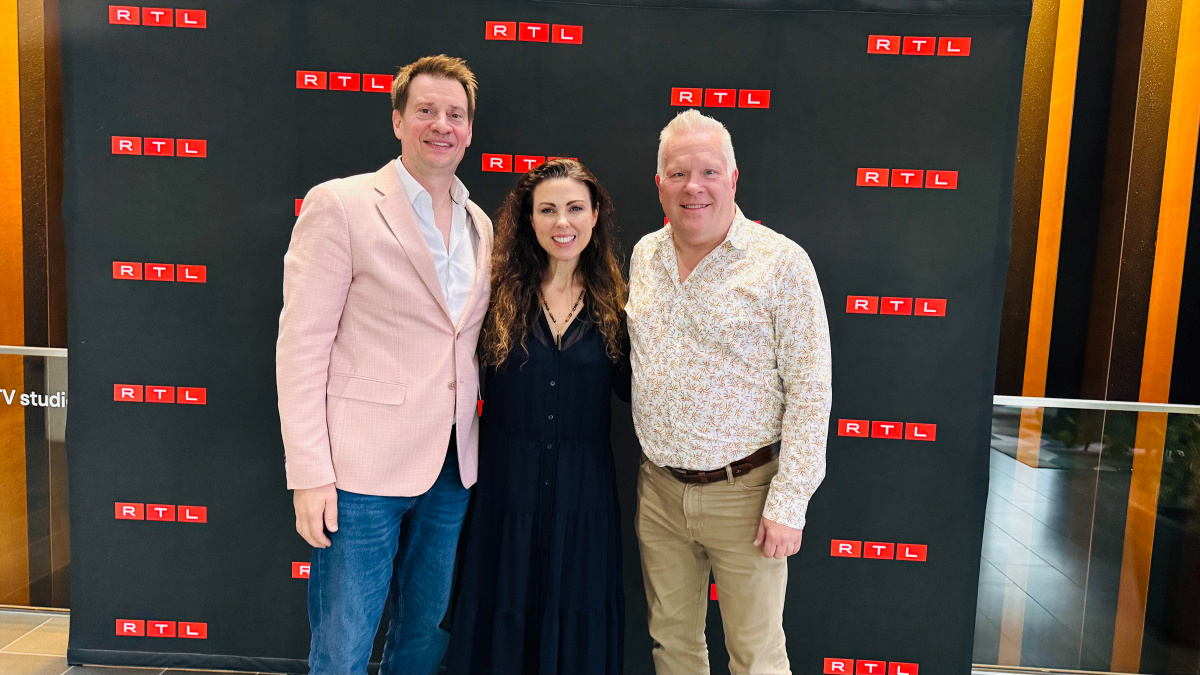

From Wisconsin roots to Luxembourg’s multicultural present, Kevin Wester and Jérôme Rouquié explore identity, migration and human connection.
What do we reach for when the structures around us feel less certain? For Kevin Wester, the answer begins with ancestry, memory and a connection carried across the Atlantic for generations. Wester grew up in Wisconsin in communities shaped by Luxembourg immigration, where surnames, food, stories and even old Luxembourgish survived long after families had left the Grand Duchy. Today, as founder and CEO of Luxembourg Legacy and founding executive director of the Luxembourg American Cultural Society, he helps descendants trace that history forward. He says the option of reclaiming Luxembourg nationality has sparked a new “renaissance” among Luxembourg Americans, especially younger generations who see citizenship as a bridge to study, work and life in Europe.
The striking part of Wester’s story is the scale of a diaspora that Luxembourg itself rarely sees. In his briefing for the show, he says nearly 23,000 adult Americans of Luxembourg descent have reclaimed nationality since 2008, with many more potentially eligible. He sees them as far more than passport holders. They are “small-a ambassadors”, people who travel back, rediscover villages and family names, build societies, share Luxembourg online and carry a modern image of the country home with them. His deeper ambition is to connect this community to Luxembourg’s future too, including what he describes as an underused pool of talent in medicine, education, research, technology, finance, the arts and sport.
Across the studio sat Jérôme Rouquié, a French-born entrepreneur who spent more than two decades travelling the world before choosing Luxembourg as home. His project, COME TO LUX, grew from a frustration with the way the country is often flattened into a stereotype of finance and institutions. Rouquié sees something richer: a place where an extraordinary range of languages, cultures and life stories coexist within a few streets. After years of crossing borders to meet the world, he found the world concentrated in one small country. His guiding idea is disarmingly simple: understand people before doing business. Listen first. Notice difference without fearing it. Find the human connection.
That becomes especially powerful when the conversation turns to migration. Wester looks back at his own ancestors, who left Luxembourg in the nineteenth century because opportunity was limited, and sees an echo in families moving countries today. Leaving home, he argues, is usually an act of risk, hope and necessity, not rejection. His experience with young people in Luxembourg led him to ask a deceptively difficult question: what makes an immigrant feel welcomed, and what invisible obstacles do our own biases create? Rouquié arrives at the same destination from another route. Difference, he says, is not a reason to withdraw. It is a reason to adapt, stay curious and learn how another person sees the world.
For Rouquié, the network also has to do something. His “3 S” for Luxembourg are stability, security and serenity, but a fourth word now matters just as much: solidarity. Through Lux Tour Solidarity, the community around COME TO LUX turns cars, gastronomy, experience and connection into fundraising for vulnerable children. The 2026 event brought together nearly 200 rally participants and more than 380 gala guests, while supporting the Fondation Sarah Grond. The point is not simply to build a network. It is to make the network useful. Rouquié’s own phrase captures it perfectly: “United by the road, brought together by the heart.”
Both men often returned to the same word: human. In an age of geopolitical anxiety, polarisation, algorithms and increasingly hard borders in our heads, their work is deliberately analogue. Meet, listen, travel, learn the story. Keep the relationship alive. Luxembourg is not perfect, and neither guest pretends it is. But its scale, multilingualism and constant history of people arriving and leaving make it an unusual laboratory for belonging. Perhaps that is the bigger story here. A country does not need to be large to have reach. A diaspora does not need to live within its borders to contribute. And identity can be strongest when it becomes an invitation to connect rather than a reason to close the door.
GUESTS & LINKS
Kevin Wester / Luxembourg Legacy
https://luxembourglegacy.com/
Luxembourg American Cultural Society
https://www.lacs.lu/
Jérôme Rouquié / LinkedIn
https://www.linkedin.com/in/jerome-rouquie/
COME TO LUX
https://www.cometolux.com/
COME TO LUX Instagram
https://www.instagram.com/cometolux/
Lux Tour Solidarity / Lux Car Meeting Instagram
https://www.instagram.com/luxcarmeeting/
Fondation Sarah Grond
https://www.fondationsarahgrond.lu/